
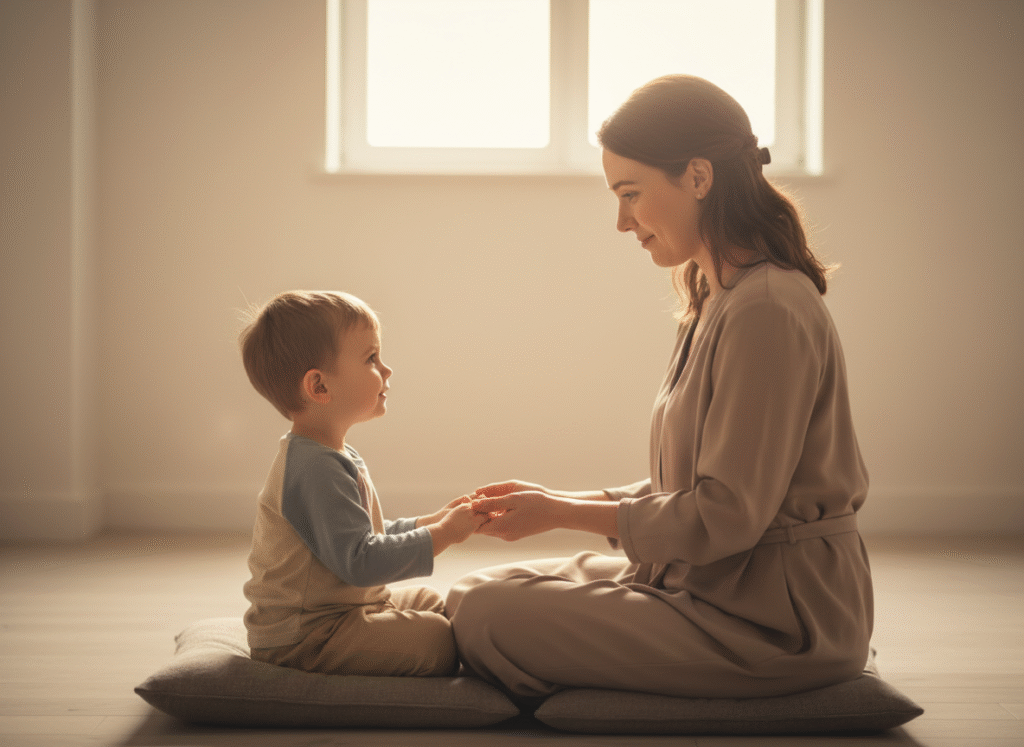
When we stopped chasing words and we started to To build a bridge, communication changes direction.
________________________
Child language developmentWe say “language” and almost always think of words. In pronunciation. In vocabulary. In that long-awaited moment when a child says "mama" and the world finally falls into place around one piece of evidence: "He's talking now." But language predates words and is greater than them. It's a way of being in the world. It's the system through which we transform experience in meaning and meaning in link. Therefore, when a child has difficulty communicating, the problem is rarely just "not saying anything." The problem is usually deeper: they can't find a way to express themselves. stable bridge between what he feels, what he understands, and what the environment demands of him.
Herein lies a paradox that, if we confront it directly, changes the approach: parents don't "teach speaking" like someone teaches math. There's no weekly schedule, no rubric, no exam. And yet, language emerges in most cases. Why? Because language isn't instilled through instruction; it's constructed through... stake. A child learns language when they live within an ecosystem where someone observes them, someone waits for them, someone interprets their attempts, and someone responds meaningfully. When we talk about children's language development We're talking about children who learn because their communication has consequencesAsking works, pointing works, looking works, approaching works. And when something "works," the brain persists.
The problem is that, without realizing it, we often teach another language: the language of performance. We ask to check, not to understand. We repeat to force, not to invite. We correct every attempt, and with that constant correction, the child learns a silent lesson: Communicating is risky. Then behaviors appear that the adult interprets as "doesn't want to": avoidance, frustration, disengagement, unintentional echolalia, tantrums. But often it's not a lack of desire; it's a lack of security and of rhythm.
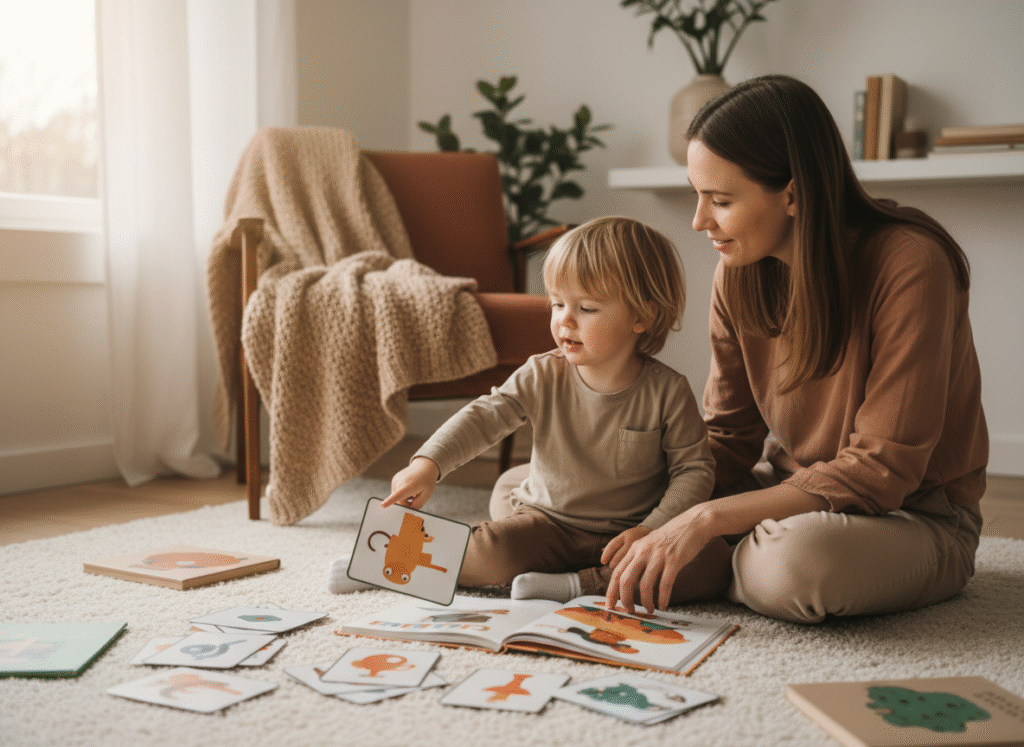
In the development of children's language, words arrive when the child feels that their communication has a safe place to land.
Therefore, “teaching language” should not mean “making them repeat words”, but creating conditions for the communicative intention if possible. pause —a real pause— is a therapeutic tool: without a pause there is no turn. chance It is also true that if we anticipate everything, the child doesn't need to participate. And the validation of the attempt It's the foundation: when we respond to a look, a gesture, a vocalization, we are telling the child "your voice exists," even if it's not yet verbal. That message is more powerful than any vocabulary list when we talk about children's language development.
The profound question, then, is not “what words do I teach them?”, but “what language am I teaching them without realizing it?”. A language for ask, but not for shareA language for obey, but not for decideA language for yield, but not for to become linkedBecause language not only names the world: it also defines the place a person occupies in it.
If I had to close with one idea, it would be this: in children's language development It's not about teaching how to speak; it's about teaching that Communicating is worthwhile. And when language doesn't appear naturally, it's not a failure of the family: it's a sign that something is needed. structure, clear models, therapeutic repetition and a supportive environment. In VICON Method We work precisely there: on building the bridge so that the child not only “says”, but can ask, share, regulate and grow.
If this article children's language development It has moved you, I propose something simple: Look at an interaction today and ask yourself if you are searching for words or building bridges. Sometimes the biggest change isn't "doing more," but do different: wait one more second, validate an attempt, make communication a safe space.
If you like, Tell me about itWhich part resonated with you the most? You can Leave a comment either share it with that family or professional who is in the "we're trying everything and nothing works" phase. And if you need us to tailor it to your specific situation (level, objectives, strategies, and structure), write to me by WhatsApp
Cristina Oroz Bajo
Founder of VICON Method, President of the Association for Aid to Children with Disabilities (AAND) and CEO of I Read Too.
Democratizing educational methodologies inclusive.