

You don't need to turn your home into a doctor's office. You need to understand what's happening in your child's body and environment, and provide simple, repeatable, and human support.
Emotional regulation is not obedience: it's security. And security is built.
The emotional regulation in children with autism It doesn't improve through scolding, rewards, or a "tough" approach. It improves when the child has more security, more predictability, and more tools to anticipate, ask for help, and recover. And that, in real life, isn't built with a nice idea: it's built with small, repeated scenes.
Imagine a typical day. Not the ideal day. One of those days filled with rushing, hunger, a change of plans, an unexpected noise, a drawn-out transition. Your child starts to tense up. Perhaps you notice it in their body before you see it in their behavior: they fidget more, tune out, become irritable, cover their ears, or cling to their usual routine as if it were a lifeline. Sometimes, from the outside, this might seem like stubbornness. But often it's something else entirely: it's their nervous system saying, "I can't handle this.".
That's where the perspective shifts. Because self-regulation doesn't mean "behaving well." Self-regulation means being able to return to a state where the child can observe, listen, wait, and learn. And in autism, this path is often more demanding because the body can easily become overwhelmed: by noise, uncertainty, demands, lack of sleep, pain, or intense socialization. Therefore, when a crisis occurs, it's usually not a whim. It's usually an overwhelming experience.
Before the crisis: learn to read the signs
When a child becomes dysregulated, they are not choosing to "misbehave." They are saying, "I can't handle this.".
Most crises don't start suddenly: they give warning signs. And when you learn to see those early signs, you gain something enormous: time. Time to reduce demand, to anticipate, to adjust the environment, to offer a way out.
Perhaps your child is more agitated, repeats themselves more, becomes more irritable, or cries easily. Perhaps they avoid eye contact, withdraw, try to hide, or run away. Perhaps they become rigid with routines, objects, or sequences. This isn't a reason to "cut them off." It's a sign that their body is already becoming more active.
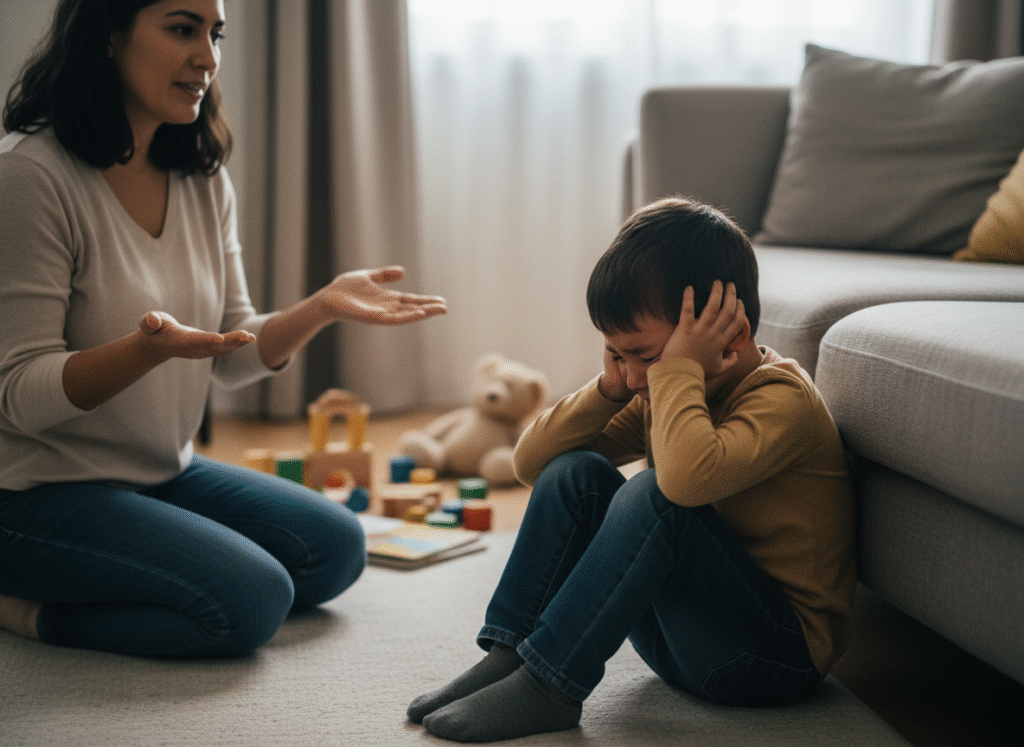
Your child isn't defying you; they're telling you their body can't take any more. And when you become an anchor, the nervous system finds its way back. That's it. emotional regulation in children with autismIt is not obedience, it is sustained security.
What really helps at home: 7 supports that last
Some families tell me, "Tell me what to do, but make sure it's possible." And that's the key. It's not about doing more. It's about providing better support.
The first support is predictability. Not as rigidity, but as relief. When your child knows what's coming, their body relaxes. Sometimes it's enough to speak in two steps: "Now... and then...". Sometimes a mini transition ritual helps: a song, a countdown, a symbolic object to accompany the change. And on low-energy days, reducing unnecessary changes can be more therapeutic than insisting on them.
The second support is learning to lower demands without feeling like you're "giving up." There will be days when your child can't handle the same things. And neither can you. On those days, the goal isn't to move forward: it's to maintain control. A minimal plan might include a key routine (mealtimes or bath time), a communication goal (asking for help or asking for a break), and a calming strategy you already know works. It's not about going backward. It's about preventing the system from breaking down.
The third support is functional communication for asking for help before the outburst. Many children explode because they don't have an effective way to ask for what they need: a pause, distance, water, silence, or to stop. When a child learns that asking works—with a word, a gesture, or a visual cue—the meltdown loses some of its power. They no longer need to scream to be heard.
The fourth point of support is something that's sometimes forgotten: adjusting the environment before adjusting the child. If the environment is screaming, the body screams. Sometimes the most powerful intervention isn't "explaining better," but changing the setting: lowering the noise level, reducing visual stimulation, avoiding peak hours, offering regulating movement. It's not about indulging. It's about the hygiene of the nervous system.
The fifth support is co-regulation. And here I want to be very honest: co-regulating isn't about being Zen. It's about offering an anchor. Fewer words, a lower voice, a steady presence. In crises, short phrases ("I'm here," "I'll help you," "Breathe with me"), pauses, and silence tend to work best. And physical contact, only if the child tolerates it. The idea isn't to control the emotion. It's to accompany it until it subsides.
The sixth support is recovery after the crisis. This period is incredibly educational, but also fragile. When the crisis ends, the body remains sensitive. If we lecture at this point, we'll only reactivate it. That's why it's usually helpful to prioritize water, food, rest, and a calming activity (soft music, gentle pressure, rocking). Later, when things have calmed down, you can name what happened with a simple phrase: “It was difficult. Next time, we'll ask for a break.”.
And the seventh support is what makes everything sustainable: therapeutic routines. Small, repeatable scenes that build tolerance and trust. Regulation is trained in micro-doses, not in grand pronouncements. Two or three routines a day, always similar, do more than a perfect plan that no one can stick to. A countdown transition from screen to activity. Getting dressed with two fixed steps and immediate reinforcement. Leaving home with a visual list and a "first/then" order. Repetition calms. Chaos wears you down.
“"In the emotional regulation in children with autism, Calm doesn't appear by magic: it's built in small transitions. When a mother slows down, anticipates what's coming, and offers a clear signal, the child doesn't just obey: He feels safe. And when there is safety, the body can breathe, wait, and reconnect. That is what makes everyday life stop being a battle and start being a journey.”
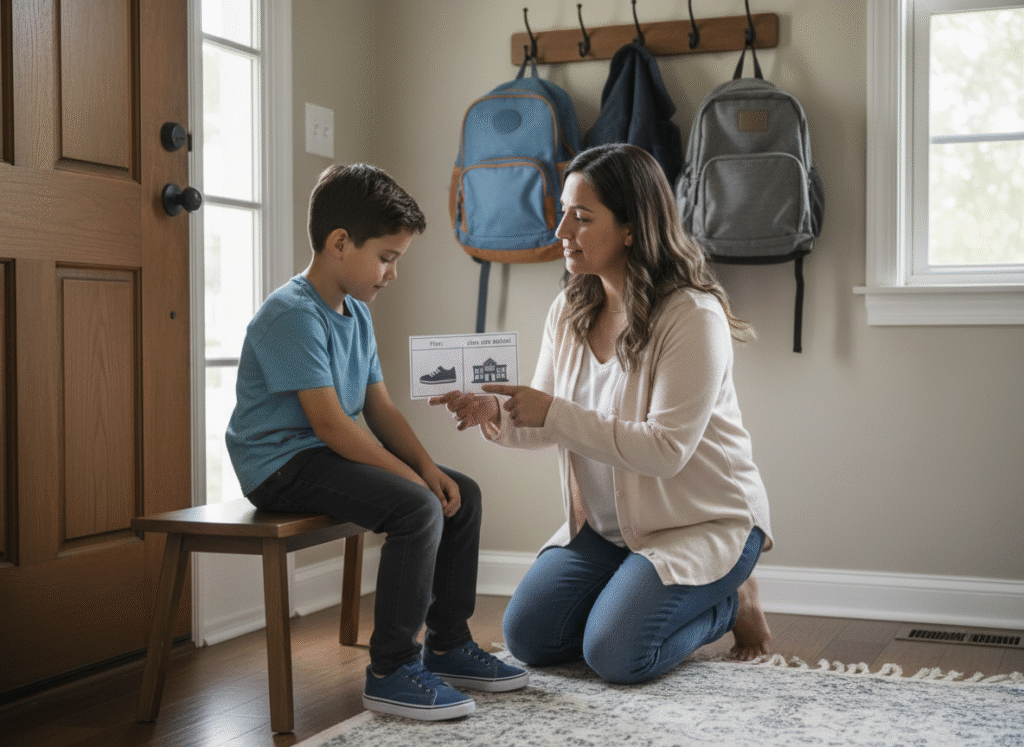
And in the schoolSo that it doesn't depend solely on home
Although this article is for families, there's an important point: emotional regulation improves faster when home and school speak the same language. School doesn't need to "provide therapy." What's needed is to maintain the conditions necessary for learning.
If you can, share three things: your child's early warning signs, what supports work for them (pause, quiet corner, headphones, anticipation), and what triggers them (noise, waiting, changes). Sometimes, just by doing that, the school day is transformed.
If this article helped you, share it with another family going through a crisis and feeling alone. emotional regulation in children with autism It is not fixed with force: it is held together with small, consistent, and human supports.
Cristina Oroz Bajo
Founder of VICON Method, President of the Association for Aid to Children with Disabilities (AAND) and CEO of I Read Too.
Democratizing educational methodologies inclusive.
