
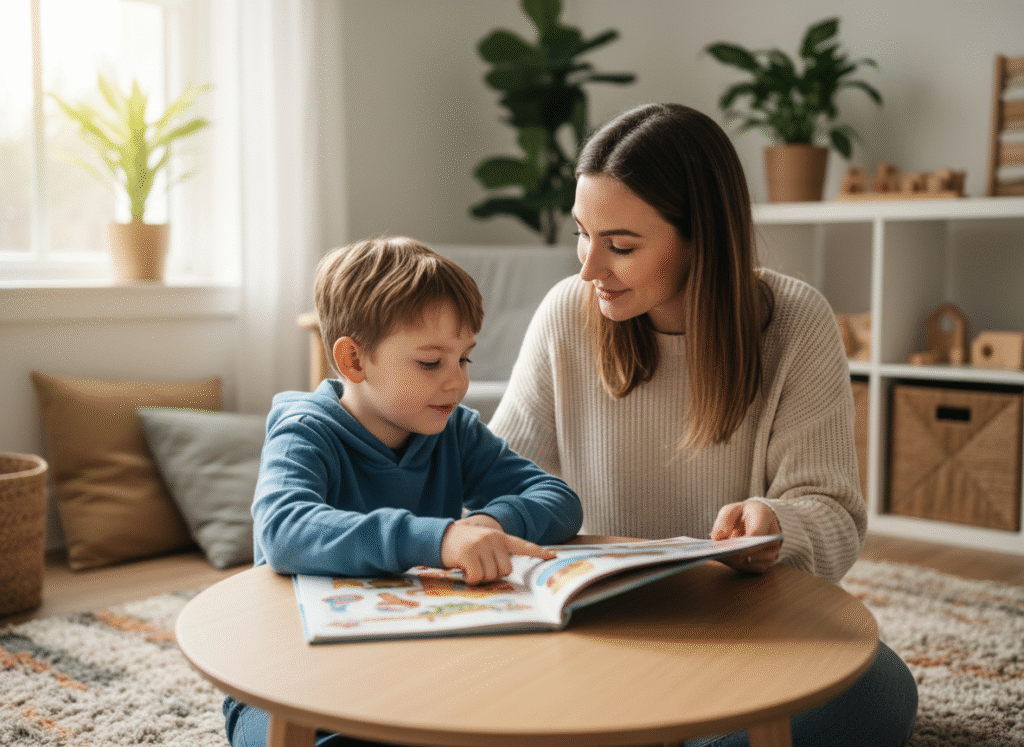
The neurobiological basis of learning is the emotional connection: without security, the brain does not learn.
«"In neuroscience, connection is the foundation of learning. It's not poetry. It's biology."»
When you work with children with communication difficulties, you have probably experienced something that defies conventional logic: a child who seemed "not to learn" suddenly learns when someone sees him differently. These moments are not coincidental. They are manifestations of a fundamental neurobiological principle.Learning is inseparable from emotional connection.
The variable that predicts the success of any intervention is not the sophistication of the technique, but the depth of the connection that facilitates it.
Neurobiological basis of learning: why connection is the foundation
Neurobiology: The Autonomic Nervous System
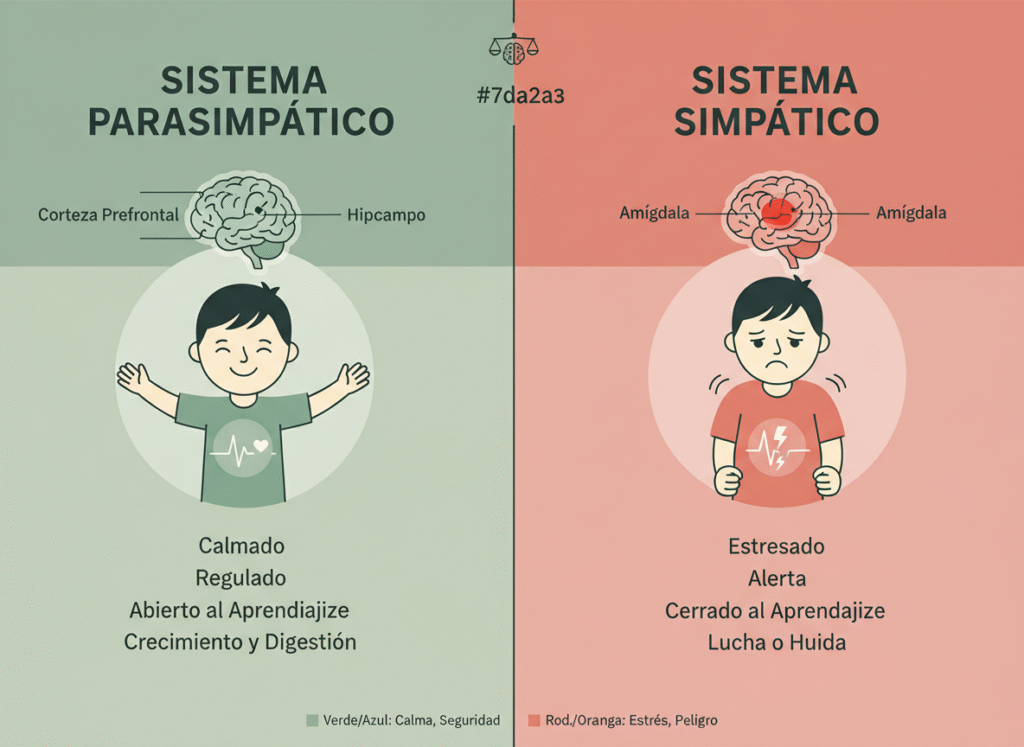
Stress vs. Willingness to Learn
The autonomic nervous system has two states: sympathetic (activation, defense) and parasympathetic (calm, openness).
When a child experiences stress, their sympathetic nervous system is activated. Cortisol and adrenaline suppress higher cognitive functions. The brain prioritizes survival over learning. Many children with developmental difficulties live in this chronic state: they have experienced repeated failures, they feel misunderstood, their nervous system is dysregulated.
When a child feels seen, understood, and safe, their parasympathetic system is activated. The prefrontal cortex—responsible for language, memory, and attention—is fully activated. This is the state where learning is possible.
The Polyvagal Theory: Regulation Through Relationship
Stephen Porges proved something radical: The child's nervous system is regulated through the relationship with the adult.
When an adult is present, calm, and genuinely connected, the child "borrows" their regulation. The vagus nerve transmits signals of security. For children with communication difficulties, this regulation through the relationship is critical.
If you don't establish a genuine connection, the child's nervous system will remain on high alert. And in that state, no intervention will work.
What Happens When There's a Connection
Parents Who Connect
When parents establish a genuine connection, they discover something surprising: Communication flows naturally.
A father who sings with his son, who looks him in the eyes, who celebrates his attempt—that father is synchronizing nervous systems. He is communicating: «I am here. I enjoy being with you. I believe in you.».
When a child feels safe, learning occurs naturally. It emerges from the neurobiological availability that the connection has created.
Therapists Who Prioritize the Relationship
Therapists who emphasize connection over protocol report faster and more sustainable transformations.
A therapist who says "I see your potential" generates a different neurobiological response than one who says "you have a delay.". Technology without connectivity is like a car without gas. Technology with connectivity is what generates real progress.
Teachers Who Transform Classrooms
Inclusion does not begin with curricular adaptations. Start by seeing the child.
When a teacher genuinely connects, the child feels less isolated. They participate more. They have more confidence. And they learn.
Music and Video Modeling: Connection Tools
Music: Regulation Through Rhythm
Music is not entertainment. It is neurobiological intervention.
When an adult sings with a child, it synchronizes their nervous systems. It creates a shared rhythm that communicates security. For children with difficulties, predictability is critical. A predictable rhythm communicates: "This is safe. I can trust it.".
Video Modeling: Identification and Belief in One's Own Ability
Video modeling works because it creates identification. When a child sees another child performing an action, they experience: "I can do that too.".
That belief in one's own abilities is a connection with oneself. And that internal connection is only possible when the child feels safe externally.
Synergy: Music + Video Modeling + Connection
When we combine music (which regulates) + video modeling (which structures) + genuine connection (which facilitates), we create complete stimulation.
Music regulates the nervous system. Video modeling provides structure and examples. Genuine connection integrates both into a real learning experience.
Connected vs. Disconnected Methods
The more we focus exclusively on protocol, the less effective the intervention becomes.
When the practitioner is completely focused on correctly applying the technique without connection, the child feels like an object. Their nervous system shuts down. They become resistant.
Simple interventions with connection generate transformation. Sophisticated interventions without a connection generate little change.
The question that will define your practice in 2026 is: Is your intervention based on connection?
Three Non-Negotiable Principles
1. Prioritize the relationship over the technique. Technique is a means, not an end. Before teaching, connect.
2. Observe the child's neurobiological readiness. If it's unregulated, regulate it first. Only then intervene.
3. Use tools that facilitate connection while teaching. Don't look for tools that teach despite the disconnection.
Connection is not a luxury. It is a neurobiological necessity.
It's the first step in any intervention that works. Without it, you're working against the child's biology. With it, structured interventions generate real transformation.
In 2026, the question is no longer "What technique do I use?" but "How do I create genuine connection?"«
The answer defines your effectiveness as a professional.
Cristina Oroz Bajo
Founder of VICON Method, President of the Association for Aid to Children with Disabilities (AAND) and CEO of I Read Too.
Democratizing educational methodologies inclusive.