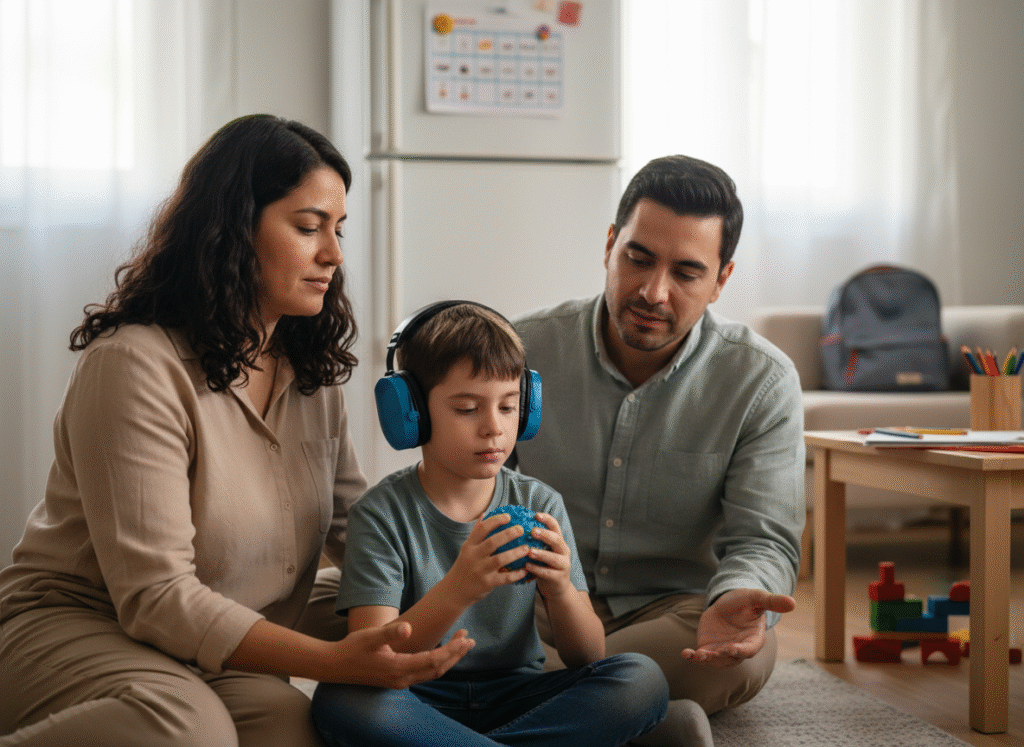
Autism is not an aesthetic, an inspirational phrase, or a "superpower" to be consumed from the outside. It is a form of neurodevelopment that permeates the real lives of children and families, with support that sometimes arrives late, and with a weariness that is not always visible.
Romanticizing autism isn't about "talking nicely about it." It's about erasing real needs. And when needs are erased, support is cut.
The autism It's everywhere in April: campaigns, colors, posts, slogans. And yes, visibility matters. But there's a fine line that, when crossed, causes harm: romanticization. Because when we turn autism into a comfortable narrative for outsiders, we leave families alone with the hardship. And the hardship isn't the child. The hardship is the lack of support, societal judgment, bureaucracy, schools that don't accommodate, inaccessible therapy, and constant criticism.
This article is not meant to "lower hopes." It seeks something more useful: awareness, support and community. No empty rhetoric. Real life.
What does it mean "“romanticizing autism”"(and why it hurts)"
Romanticizing isn't about speaking fondly. It's about telling an incomplete story.
It's choosing a snippet that sounds nice to an outsider, but that leaves out what sustains the real lives of families. It's turning a neurodevelopmental condition into a consumable narrative: "inspiring," "tender," "special." And mind you: of course there is love, there is pride, there are beautiful moments. But when only We show that, the message that remains is dangerous: that support is not needed, that everything is solved with attitude, that the problem is "the gaze" and not accessibility.
Romanticizing autism means saying “we’re all a little autistic” (and thereby minimizing it). It means saying “it’s a superpower” (and thereby making support invisible). It means sharing only “nice” stories (and thereby excluding those who are just surviving). It means using autism as a metaphor for “genius” or “sensitivity” without acknowledging the challenges: communication, self-regulation, sleep, eating, anxiety, rigidity, transitions, access to school, access to therapies.
It is also romanticizing when the visible is applauded and the invisible is judged: when the child "who behaves well" is celebrated without asking how much energy it costs him to sustain himself; when "independence" is admired without seeing the work of anticipation, adaptation and co-regulation that lies behind it; when it is demanded that he "adapt" without adapting the environment.
And when that incomplete story becomes the dominant one, something serious happens: society stops understanding why a family needs adaptations, support, resources, and respect. It becomes easier to offer opinions than to offer support. Easier to say "how exaggerated" than to ask "what do they need?" Easier to demand "limits" than to offer accessibility.
That's why it hurts: because it's not a discussion about words. It's a discussion about rights. When things are romanticized, needs become blurred. And when needs become blurred, support is cut.
How autism is experienced in families (something that almost never appears in a post)
If you live with the autism, There are days that are unlike those of other families. Not because your child is "less" or "more." But because the world is designed for a different kind of nervous system.
Some mornings start early because sleep is disrupted. Some meals aren't a "treat" but rather a choice, driven by a desire for texture, anxiety, or a need for control. Some outings are planned like an operation: noise, lights, lines, waiting, restrooms, stares. Some transitions (getting dressed, leaving, turning off screens, changing activities) can feel like climbing a mountain.
And on top of all that, there's the invisible burden: explaining it over and over again. To the school. To the family. To the professionals. To the people who have opinions. To those who observe a crisis and declare, "It lacks boundaries.".
It's not uncommon for many families to experience a mixture of immense love and profound exhaustion. And yet, they still feel guilty for being tired.
It's not that families "can't do it." It's that many times they are supporting on their own what should be supported by a network.
The problem isn't the child: it's the unsupportive environment
There is a phrase that changes your perspective: the behavior is communication. And in autism, many behaviors appear when the child cannot ask for help, cannot anticipate, cannot tolerate a demand, or is overwhelmed.
When the environment doesn't adapt, the child becomes dysregulated. When the environment demands things "as if nothing were wrong," the child explodes. When the environment punishes what it doesn't understand, the child learns fear.
Therefore, talking about autism with awareness is not just about the diagnosis. It's about accessibility, support, functional communication, emotional regulation, inclusive schools, and family support.
What really helps (and what is usually lacking)
If I had to sum it up in one idea today: What helps the most is what is sustained.
It helps if the child has tools to communicate (with words, gestures, pictograms, AAC). It helps to have clear and predictable routines. It helps if the adult learns to read early signs of overload. It helps to reduce demands when the body is already at its limit. It helps with co-regulation: less talking, more presence.
And it helps—a great deal—that the family isn't alone. That there's a professional who truly provides support, who teaches strategies applicable at home, who doesn't blame, who interprets what's happening in the child's body and in their environment.
What's usually lacking isn't "desire." It's time, guidance, resources, and a supportive community.
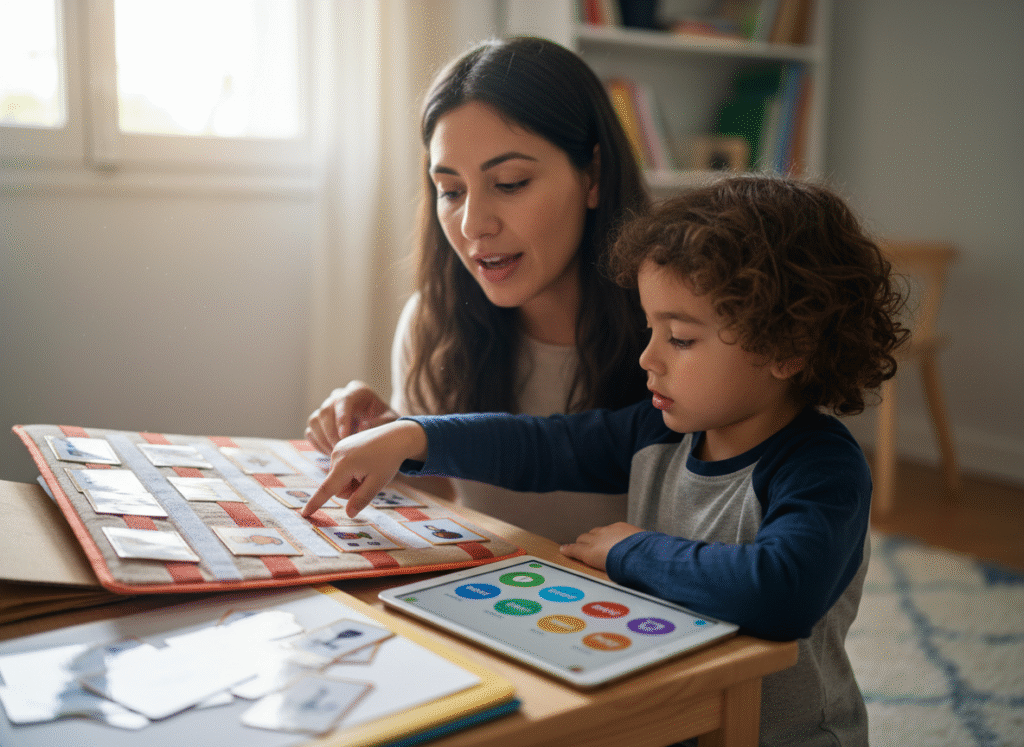
“"In autism, Communication isn't just words. It's words, gestures, pictograms, and AAC: all valid ways of saying ‘'I understand you'’ and ‘'here I am'’. When we provide a system for communication, crises decrease… and connection increases.”
What you can do if you want to accompany (without intruding, without judging)
Being there for someone isn't about giving opinions. It's about asking respectful questions and supporting them with small actions. You can start with something simple: believing the family. If they tell you, "This is difficult for them," don't argue. If they say, "This is upsetting their mood," don't downplay it.
But if you want to go a step further, here are some ideas that really provide relief (because they are concrete and don't require the family to "explain everything" again):
- Offers assistance with flexible scheduling: “"Shall I go to the supermarket with you on Tuesday?" "Shall I take you to therapy and wait for you outside?" "Shall I stop by your house at 6 pm and stay with your siblings for an hour?"”
- Sustain the everyday: Prepare a meal, do some shopping, run an errand, be available for a 10-minute call.
- Ask a question before speaking: “What do you need now?” “Do you prefer that I stay close or give you space?”
You can also learn to see a crisis differently: not as "bad behavior," but as a body that can't take any more. Sometimes what seems like a "whim" is overload. Sometimes what seems like a "challenge" is fear. Sometimes what seems like "not wanting to" is "not being able to yet.".
And you can be part of a kinder environment, with simple gestures that change the day:
- Lower the volume and reduce stimuli when you notice that the child is becoming overwhelmed.
- Give time (more time to respond, to enter, to exit, to transition).
- Respect headphones or sensory tools without comment.
- Accept that a child does not greet, does not look you in the eyes, or does not want contact.
- Do not forceNo kisses, no hugs, no "look me in the eyes", no "behave yourself".
Accompanying someone in this way isn't about "doing it perfectly." It's about doing something profoundly human: Stop judging and start supporting.
World Autism Day: Let visibility not be just a symbol
Visibility is only useful if it translates into real change.
It works if it fosters schools that truly adapt: with in-classroom support, flexible schedules, calm spaces, trained teachers, and a perspective that doesn't punish difference. It works if it encourages professional teams to provide support without blame: without phrases like "you don't set boundaries," without one-size-fits-all solutions, without demanding that families act as therapists 24/7 without guidance or support.
It works if it translates into public policies that fund support and don't force families to beg for rights: timely diagnoses, accessible therapies, school support, clear benefits, and less burdensome procedures. It works if it strengthens the communities that provide support: networks of families, neighbors, schools, clubs, and cultural and healthcare spaces that become more accessible and more humane.
And it works, above all, if the focus shifts: if we stop demanding that the child fit in at any cost—at the expense of their well-being, self-regulation, and self-esteem—and start asking the environment to be more accessible. To lower the noise when necessary. To anticipate. To adapt. To respect other ways of communicating. To understand that a crisis is not "bad behavior," but rather an overload.
Because the autism It doesn't need to be romanticized. It needs to be understood. And understood means: listened to, supported, and given real resources.
Community: Support families, not just on April 2nd
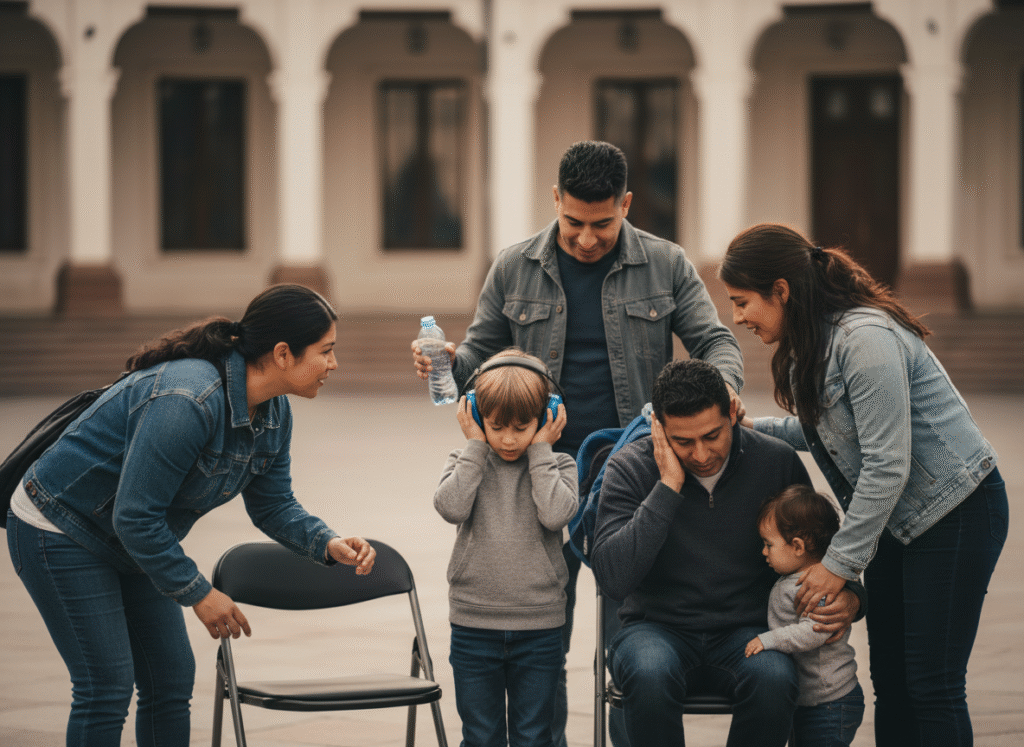
If you've made it this far, I propose something concrete: that this year World Day of autism Don't just leave it at a pretty post.
Let it become a network. So that when you see a tired family, you don't think "how exaggerated," but rather "what support do they need?" When you see a child in crisis, you don't think "how rude," but rather "what's going on inside them?" When you hear a difficult story, don't respond with platitudes, but with genuine presence.
If this article touched you, please share it. Because supporting families is building community. And community—when it's genuine—is also therapy.
Cristina Oroz Bajo
Founder of VICON Method, President of the Association for Aid to Children with Disabilities (AAND) and CEO of I Read Too.
Democratizing educational methodologies inclusive